Guides
Travertine vs marble: how to choose
Compare travertine and marble for furniture: appearance, porosity, care and where each suits a room.
Travertine vs marble: how to choose
Travertine and marble are both natural stones used for coffee and dining tables, but they look and behave differently. This guide compares them on appearance, porosity, care and typical uses so you can pick the right one for your room. It is general information, not a promise about any specific piece.
How they look
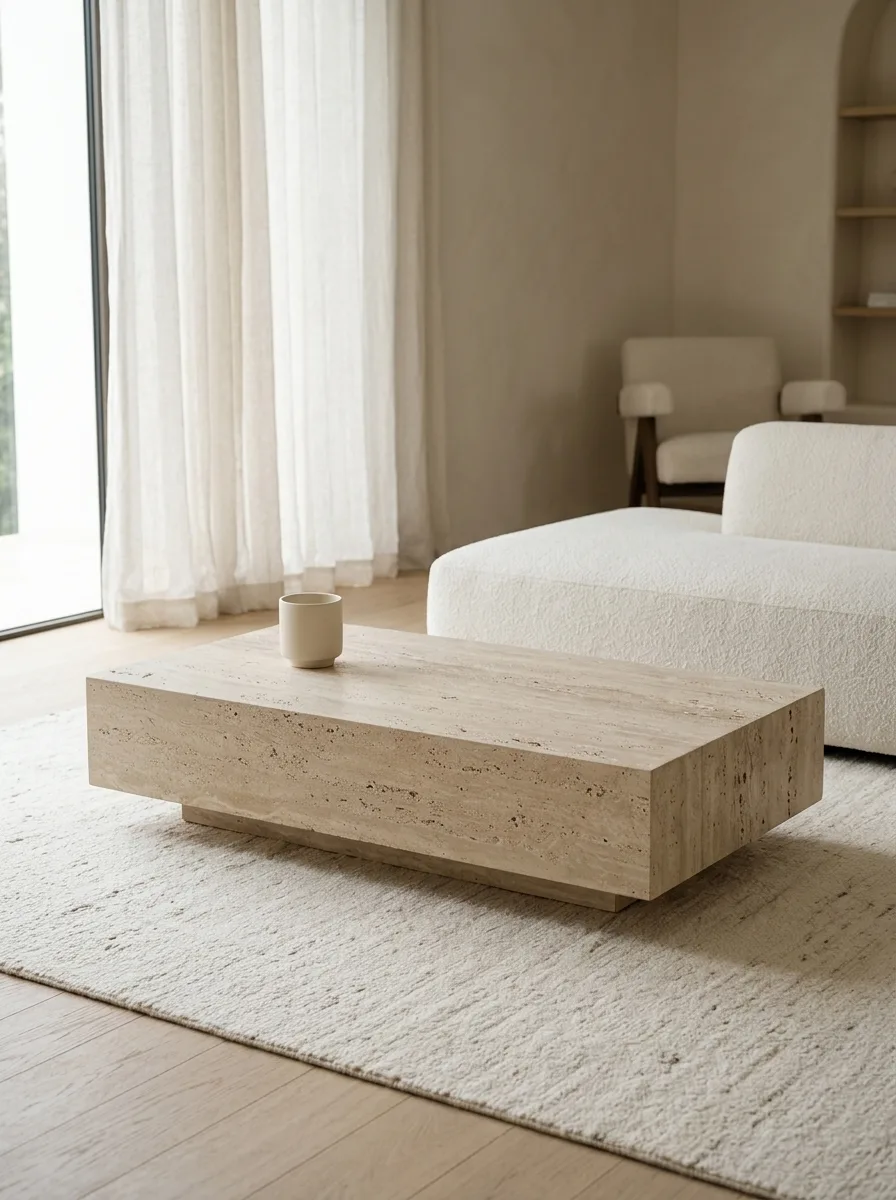
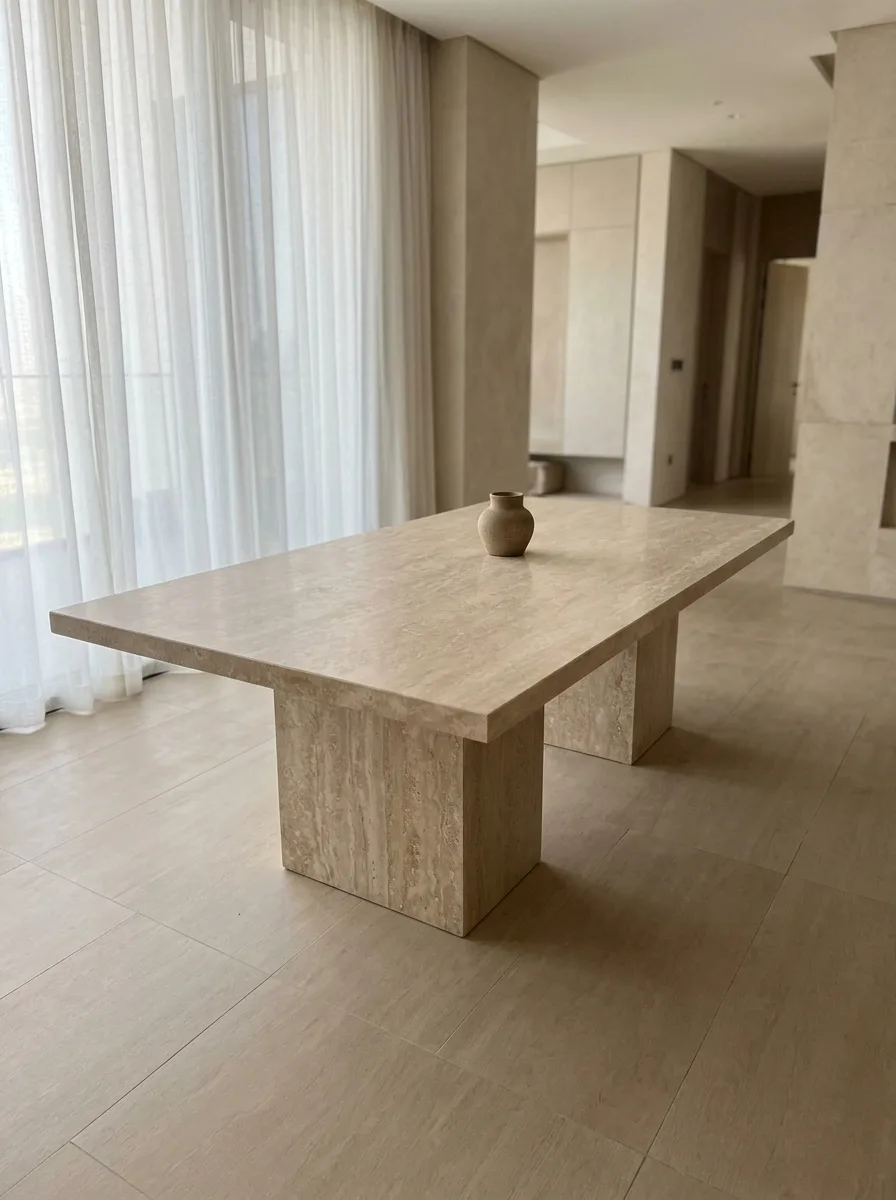
Marble is a metamorphic rock formed when limestone is recrystallised by heat and pressure. It typically shows flowing veins and a smooth, polished surface. Travertine is a form of limestone deposited by mineral-rich spring water. It usually has a warmer, banded appearance with small natural pits and a slightly textured surface. Neither is better; the difference is aesthetic.
Porosity and staining
Both stones are porous to a degree and can stain if spills are left. Marble etches (dulls) on contact with acids such as citrus, vinegar or some cleaners. Travertine is also a calcium-based stone and needs the same protection from acids. For a dining table that sees daily spills, either works if you use coasters and trivets, wipe spills promptly and follow a sealer manufacturer's guidance.
Care in daily use
- Wipe spills immediately with a soft, damp cloth.
- Use coasters under glasses and trivets under hot dishes.
- Avoid vinegar, lemon, abrasive powders and generic bathroom cleaners on both stones.
- Sealers can reduce staining on porous stone; follow the manufacturer's instructions for how often to reapply.
Where each suits a room
- Travertine suits warm, relaxed interiors. Its texture makes fingerprints and smudges less obvious than on a polished surface.
- Marble suits formal or minimal rooms where a clean veined surface is the point. Pale marbles show marks more readily than dark ones.
- For a coffee table in a busy family room, honed travertine is often the lower-maintenance choice. For a statement dining table, marble's veining is hard to beat.
Our range
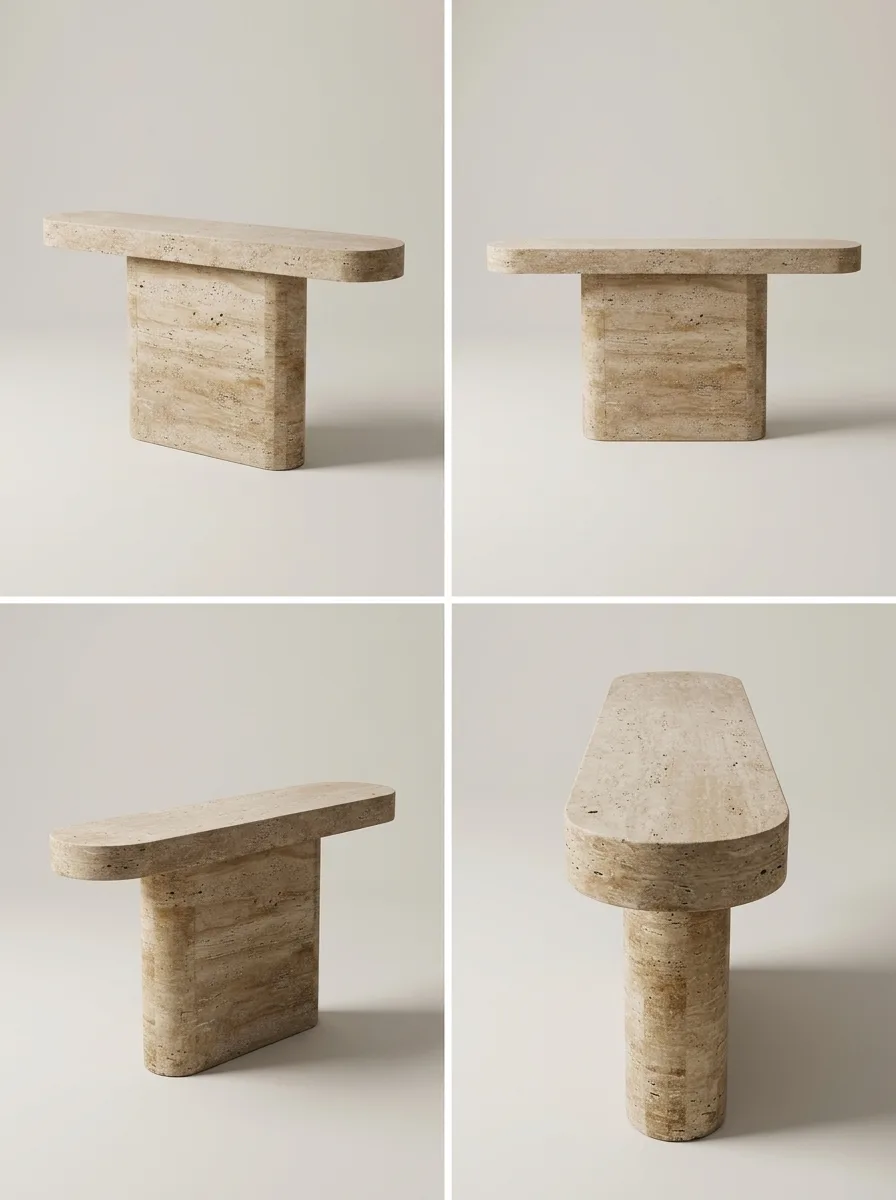
Al Madani Marbles makes both: travertine coffee tables, dining tables, console tables and benches, and marble pieces in stones such as Rosalia, Verde Alpi, Rosa Levanto, Volakas White and Calacatta. Every piece keeps its natural variation, so no two tables are identical. Pieces are made to order and custom sizes are available, so enquire with the piece name.